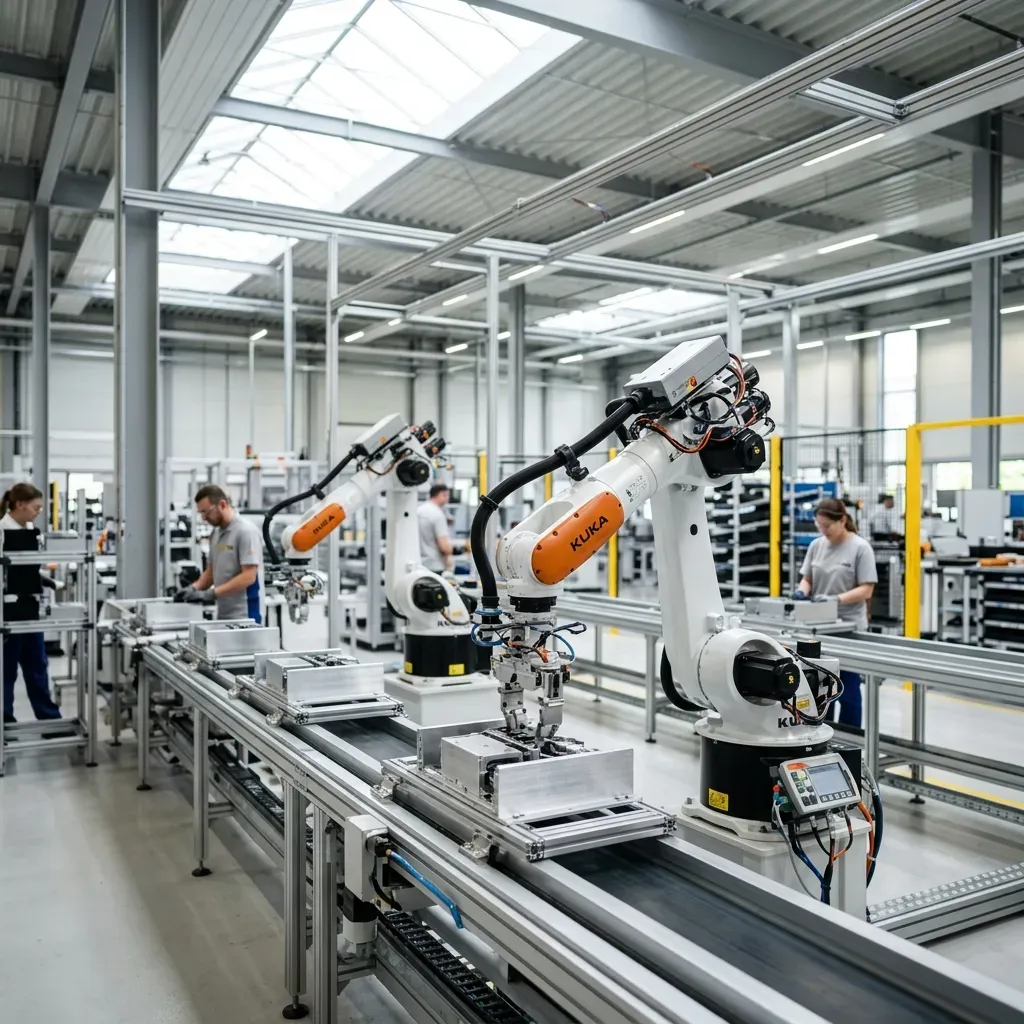
Intelligence at Line Speed
Manufacturing is a domain where the data is abundant and the margin for error is measured in parts per million. Production lines generate continuous telemetry from hundreds of sensors. Quality cameras capture thousands of frames per hour. Yet in most plants, that data is archived rather than acted upon — because the real-time analytical infrastructure to turn it into decisions does not exist.
We build that infrastructure. From computer vision quality control systems that detect surface defects the human eye consistently misses, to ML-driven OEE optimisation that identifies hidden bottlenecks in complex production workflows, our systems run at the speed of the line — not the speed of a weekly management report.
Manufacturing AI Impact
| Metric | Before Deployment | Post LineEquation |
|---|---|---|
| Defect Detection | Manual Visual Inspection | CV Model @ 99.4% Accuracy |
| OEE Baseline | 68% (Industry Average) | 82% (Post-Deployment) |
| Maintenance Cost | Reactive + Scheduled | -31% via Predictive ML |
| Quality Audit Speed | Hours per Batch | Real-time per Unit |
Manufacturing AI Applications
Computer Vision Quality Control
We train and deploy custom vision models that inspect products at line speed for surface defects, dimensional deviations, assembly errors, and packaging anomalies. Running on edge compute directly on the production line, these models flag defective units in under 50ms — faster and more consistently than any human inspection team, without the fatigue-related drift that makes manual QC unreliable on long shifts.
Predictive Maintenance & Asset Health
We build ML models trained on sensor telemetry — vibration spectra, thermal signatures, pressure cycles, power draw — that predict equipment failures days in advance. The models are integrated with CMMS platforms to automatically generate work orders, pre-position spare parts, and schedule maintenance during planned downtime windows. The result is a shift from reactive maintenance to a fully condition-based regime.
Production Scheduling Optimisation
We apply combinatorial optimisation and constraint-based ML to complex production scheduling problems — balancing machine capacity, material availability, workforce skills, and customer due dates simultaneously. The resulting schedules consistently outperform those produced by experienced planners on cycle time and on-time delivery metrics.